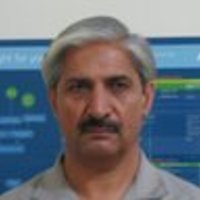
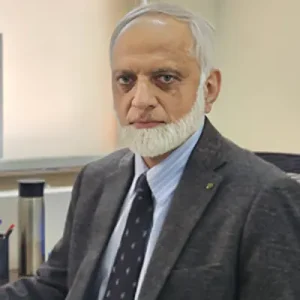
Dr. Shaheen N. Khan
Professor · 1 July 1990 – 16 August 2010
Dr. Khan's research career began in 1970 with an M.Sc thesis on the morphogenesis of erythrocytes in Rana cyanophlyctis, comparing normal metamorphosis with thyroxin- and radiation-induced metamorphosis — work that produced six publications, first position in her M.Sc, and merit scholarships from matriculation onward. From 1974 to 1981 she worked on breast cancer and lymphomas at the Ontario Cancer Research Institute in Toronto, Canada. She then trained in microbiology at the Toronto Institute of Medical Technology before joining a clinical pathology laboratory in Karachi in 1981, and in 1987 joined the National Health Research Complex at Shaikh Zayed Hospital, Lahore, where she studied inherited metabolic disorders and published a further six papers.
She joined CAMB in 1990 to begin a molecular biology research programme centred on the genetic basis of inherited disorders, starting with beta-thalassaemia, Pakistan's most prevalent haemoglobin disorder — publishing the country's first paper on its molecular genetic diagnosis. Over her career she molecularly characterised alpha- and beta-thalassaemia, reporting 22 beta-thalassaemia mutations (including three rare mutations not previously reported in Asian populations) and three alpha-thalassaemia mutations, with frequencies mapped across six of Pakistan's major ethnic and linguistic groups. She also identified three beta-globin chain haemoglobin variants and one rare alpha-2-globin chain variant (Hb Sallanches), and reported that alpha-gene deletions and Xmn1 polymorphism produce milder thalassaemia phenotypes.
She contributed to an IAEA-sponsored multi-centre study spanning Thailand, Pakistan, Sri Lanka, Mauritius, Syria, Cyprus and India that developed a simplified ARMS-PCR molecular diagnostic strategy for thalassaemia, and used these findings to develop prenatal-diagnosis procedures. With encouragement from founding director Prof. S. Riazuddin, this programme was later extended to other genetic diseases, including polycystic kidney disease and hereditary hearing and vision impairment.