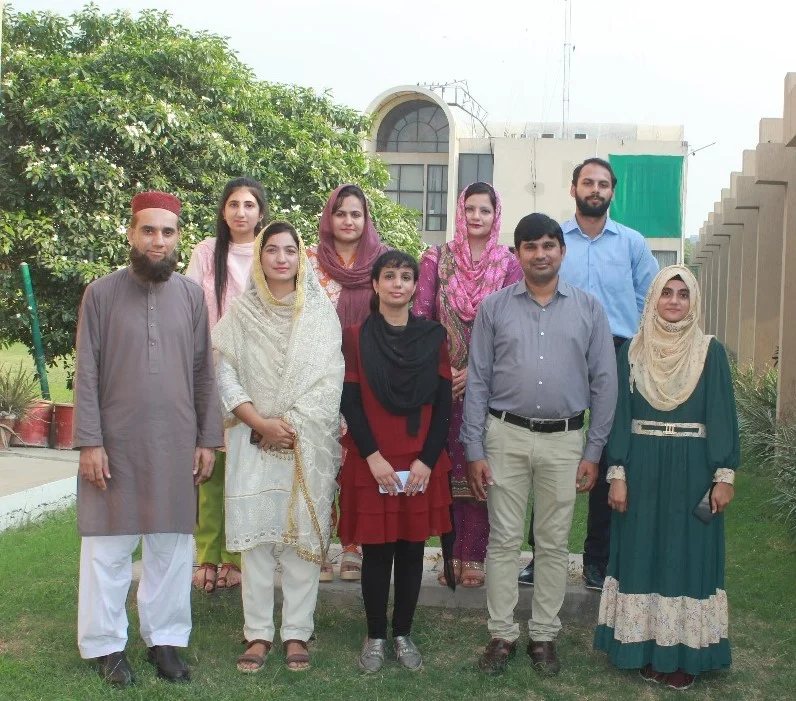
Forensic Research Lab team photo at CEMB

Research at CEMB

Forensic Research

The lab develops and applies DNA profiling techniques for crime investigation, paternity testing and population genetics, running Pakistan's first state-of-the-art forensic DNA services laboratory.

Laboratory overview

From biological discovery to practical solutions.

Research develops new STR multiplex systems and population DNA databases for accurate profiling from degraded samples, phylogenetic analysis of Pakistani ethnic groups, and SNP-based prediction of phenotypic traits — supporting forensic casework, paternity testing and trace evidence analysis nationwide.
Forensic DNA profilingPopulation geneticsDNA phenotyping
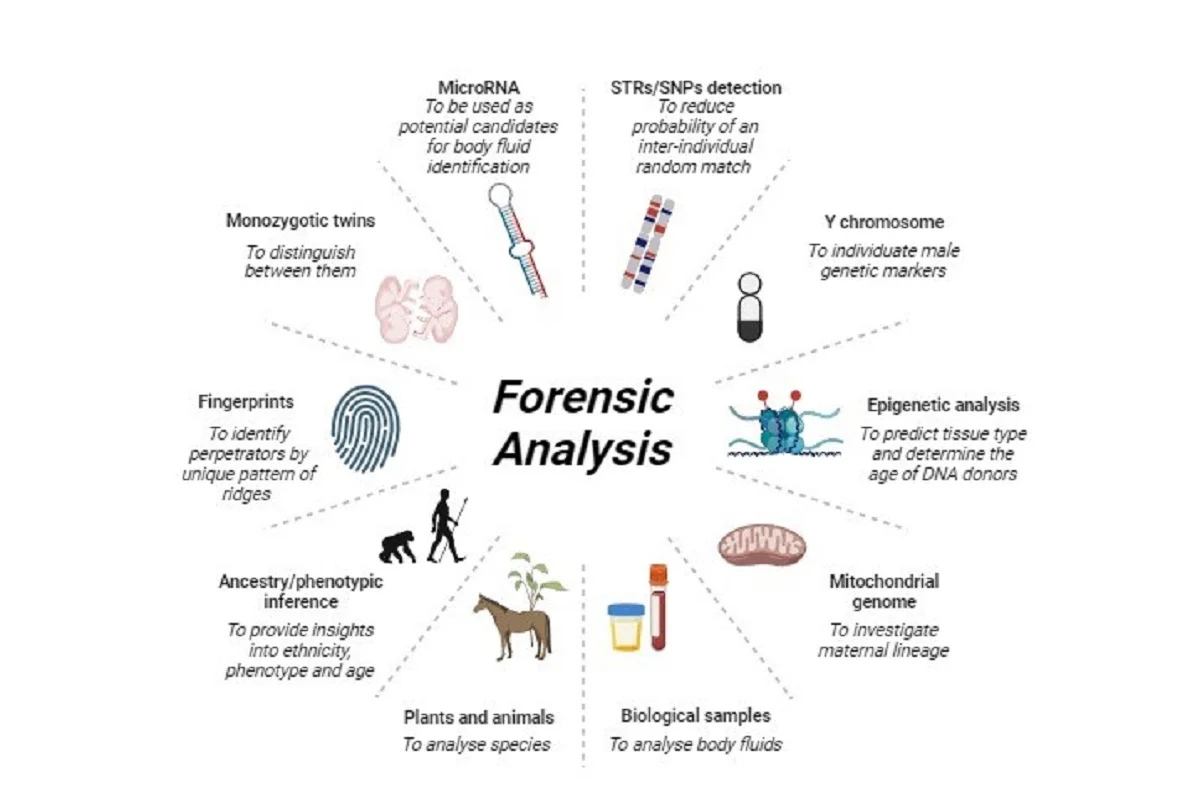
Forensic DNA workflow I 01
Forensic DNA laboratory pictorial diagram 1
Forensic laboratory workflow, from sample collection to DNA profiling.
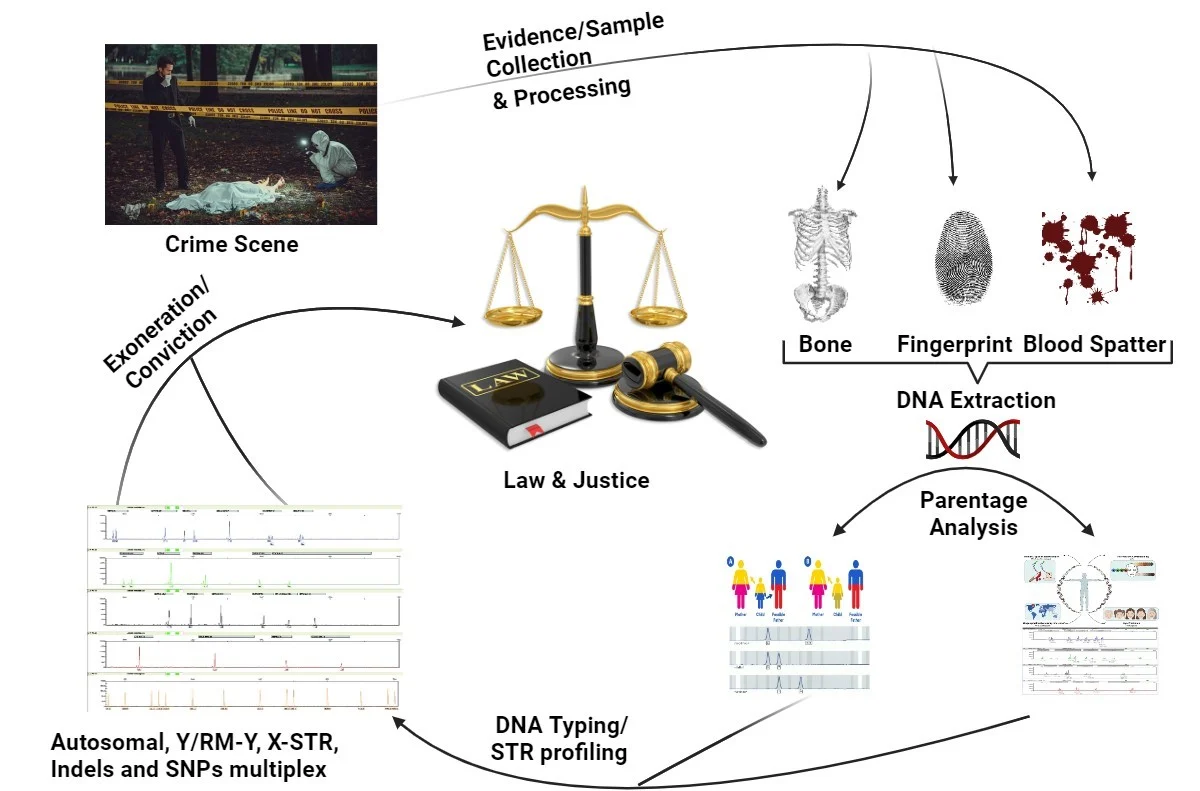
Forensic DNA workflow II 02
Forensic DNA laboratory pictorial diagram 2
Forensic laboratory workflow, continued.

Research programme

What the lab works on

The programme spans discovery, laboratory validation and the development of tools and formulations for real-world use.

  1. 01

    Population & phylogenetic genetics

    Phylogenetic analysis of Pakistani ethnic population groups and STR frequency databases.

  2. 02

    STR & Y-STR multiplex systems

    Development of new STR multiplex systems, including rapidly mutating and next-generation-sequenced Y-STRs.

  3. 03

    DNA phenotyping & prediction

    SNP genotyping for DNA phenotyping, age prediction and protein modelling.

  4. 04

    Trace evidence & toxicology

    Trace evidence analysis, forensic toxicology and computational drug design.

Funding

Research grants

  • Development of a 21 STR loci DNA database for each province of PakistanHEC NRPU project · Rs 3.6 million
  • Mutation mechanism of rapidly mutating Y-STRs through next-generation sequencingCollaboration with University of Technology Sydney, Australia · funded by HEC · Rs 5 million
  • Forensic evaluation of STRs, mtDNA and methylation markers for trace DNA evidence analysisCollaboration with Uppsala University, Sweden, and Stockholm police
  • Y-STR haplotype diversity analysis at 24Y/RM-YSTRs in the Kashmiri population of PakistanORIC-funded · Rs 0.25 million
  • Y-STR database development at 24Y/RM-YSTRs in the Sindhi population of PakistanORIC-funded · Rs 0.2 million

Achievements

Notable outcomes

  • Established the first state-of-the-art Forensic DNA services laboratory in Pakistan
  • Conducted forensic training workshops for police officials, lawyers and medicolegal doctors
  • Developed new STR multiplex systems for simultaneous amplification of miniSTRs, autosomal, Y-chromosomal and X-STRs
  • Developed a 19-locus rapidly mutating Y-STR multiplex system to differentiate males of the same paternal lineage
  • Detected and submitted rare and variant STR alleles to international databases including NIST, YHRD and STRidER
  • Detected trace chemical explosives via Raman spectroscopy with touch-DNA profiling
  • Characterised fingerprint pattern and ridge-density variation through SNP genotyping in the Pakistani population
  • 13 PhD students and 45 MPhil students have completed their degrees from this lab

Research group

Meet the team

Contact the Director, group lead or a co-investigator directly, or reach a doctoral researcher by email.

Doctoral researchers

  • Muhammad ShahzadDoctoral Researcher
  • Samia TanveerDoctoral Researcher
  • Fatima ArshadDoctoral Researcher
  • Sammar NaveedDoctoral Researcher
  • Marwa AnwarMPhil Student
  • Ibrahim Salam BaigMPhil Student
  • Javaria IlyasMPhil Student

Connect with CEMB

Need more information?

Contact the right team